
P2P crypto trading: the path from bank transfer to crypto

Exchanger Guides Writer
P2P puts crypto on a platform and cash through your bank. Understand escrow, Ukrainian transfer limits and the differences between trading with a person and using an exchanger.
P2P crypto trading connects two users: a platform holds the seller’s crypto while the buyer pays through a bank. Both the sender’s identity and the conditions for releasing crypto matter.
How does escrow work in a P2P trade?
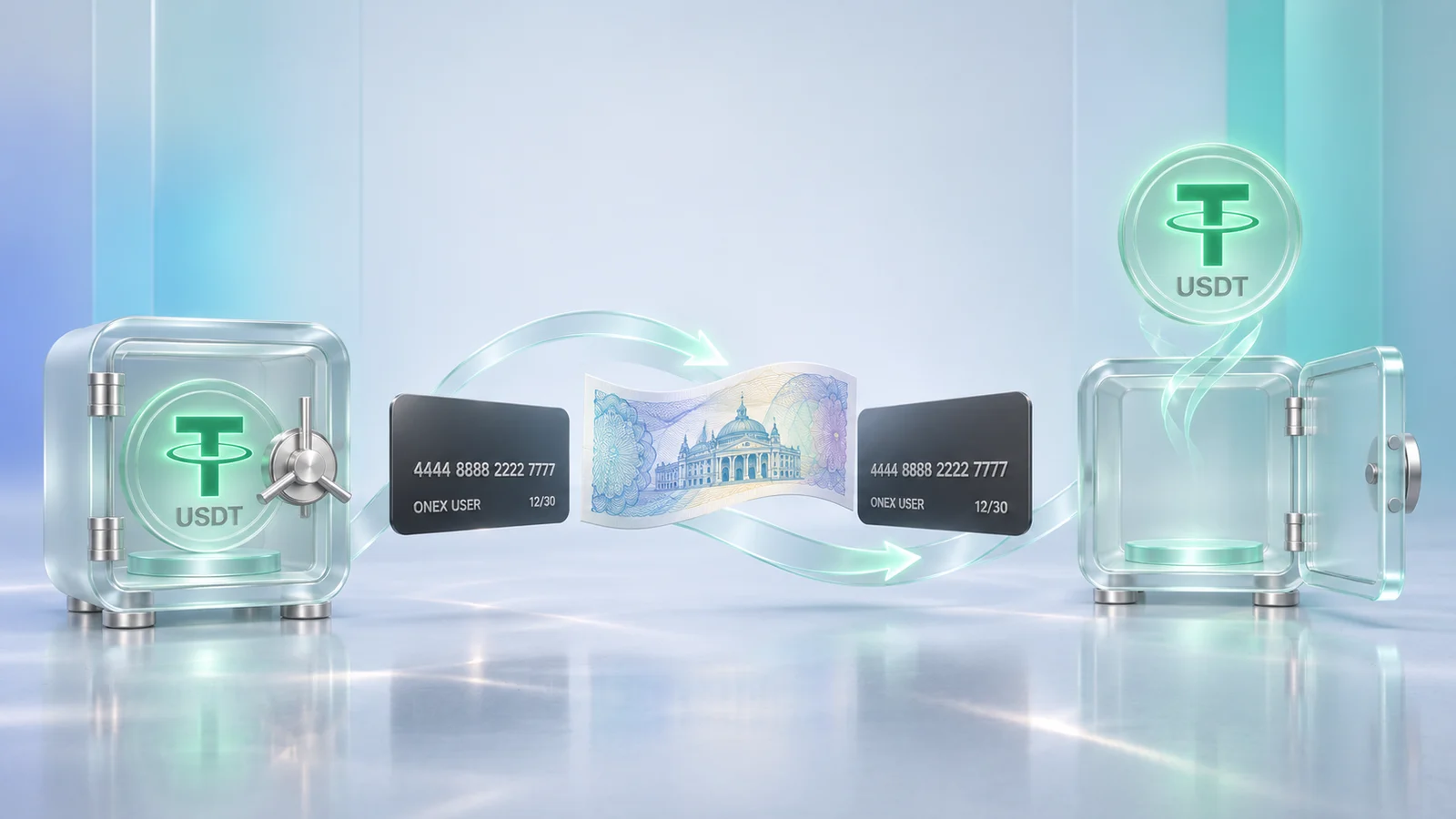
Escrow holds the seller’s crypto until the seller confirms receiving payment. In P2P trading, the platform handles that release, while the buyer’s hryvnia payment moves between bank cards or accounts outside the platform.
- Choose an ad. Read its price and payment terms before agreeing to trade with the advertiser.
- Crypto enters escrow. The platform holds the seller’s crypto while the participants arrange payment.
- The buyer pays. Hryvnias move through the banking system to the seller’s card or account.
- The seller confirms receipt. Once payment is confirmed, the platform releases the crypto to the buyer.
P2P escrow does not establish where the buyer’s bank funds came from.
What happens when you trade on Binance P2P?
Binance P2P is an example of a marketplace on a centralized crypto exchange. You choose a user’s ad, with its stated price and payment method, and settle the bank payment with that person.
Read the platform’s own P2P payment rules and dispute process before starting a trade.
For buying options, see how to buy USDT with hryvnias. To compare an exchanger route with P2P, the Privat24 to USDT TRC20 offers page has a live table and converter for your amount.
What card risks come with P2P trading?
P2P exposes your bank account to payments involving someone you do not know. The person in the trade and the owner of the paying card may be different people.
Problems arise when payment claims, banking records and the sender’s identity do not match the P2P agreement.
- Third-party payment: the money arrives from someone other than your counterparty, leaving a different name in your banking records.
- Disputed receipt: one person says they paid while the other reports no incoming transfer.
- Stolen funds: money later identified as stolen can prompt a bank restriction or questions about the transfer’s purpose and source.
- False confirmation: a payment screenshot can be fabricated.
- Off-platform arrangements: moving P2P negotiations into a messenger leaves the platform’s trade record without those messages or changed details.
Contact platform support if the details conflict. For the crypto side, see AML checks on cryptocurrency; the bank payment remains a separate part of the transaction.
Which bank transfer limits apply to P2P in Ukraine?
P2P buyers send bank funds; sellers receive them. The relevant limit depends on that direction, your bank’s terms and your documented income.
The NBU’s temporary UAH 150,000 monthly limit on individuals’ outgoing card-to-card transfers ran from 1 October 2024 through 31 March 2025 and was not extended.
Banks that signed the December 2024 payment-market transparency memorandum apply limits based on risk to customers without documented income, including IBAN transfers. The memorandum’s limits do not apply to salary customers, others with confirmed income or volunteers identified by their bank.
PrivatBank publishes separate monthly allowances for receiving and sending transfers. P2P payments count toward the relevant allowance alongside other covered transfers.
| Direction | Monthly amount or count | Transfers counted | Increasing the allowance |
|---|---|---|---|
| Receiving | UAH 1,000,000 or 350 transfers | Incoming card-to-card and IBAN transfers | Ask the bank about your account’s terms |
| Sending | UAH 100,000 or 200 transfers; UAH 50,000 for some customers | Card-to-card and IBAN payments to other people | Provide income documents, such as an OK-7 certificate |
Transfers between your own cards do not count. Since 1 September 2026, payments to sole proprietors and companies also count toward the sending limit; PrivatBank describes limits as a measure against the shadow economy and money laundering.
How would four P2P sales affect those limits?
The seller uses the receiving allowance; the buyer uses the sending allowance. A hypothetical example, not a live rate: four planned P2P sales bringing in UAH 30,000 each would total UAH 120,000.
Assume one buyer would pay for all four trades and neither participant has other counted transfers that month. The four expected receipts fall below PrivatBank’s published UAH 1,000,000 and 350-transfer receiving thresholds.
The buyer’s planned UAH 120,000 outgoing total exceeds a UAH 100,000 sending allowance by UAH 20,000, despite being below 200 transfers. This assumes that allowance applies to the buyer; other banks’ terms differ.
Should you use P2P or an exchanger for USDT and hryvnias?
P2P means choosing a person’s ad; an exchanger means placing an order with a company that publishes its terms and AML/KYC rules. Choose according to payment arrangements, the quoted amount and support procedures. This guide is not financial advice.
Compare the amount you would receive for the same quantity of USDT TRC20 and the same hryvnia payout method. P2P prices vary by ad.
| Detail | P2P | Exchanger |
|---|---|---|
| Counterparty | A private individual | A company with published terms |
| Price | Set by the individual ad | Shown before payment and available for comparison |
| Payment | A bank transfer between participants, outside the platform | Payment or receipt using the created order’s details |
| Checks | The platform’s own trading rules | The exchanger’s AML/KYC rules |
| Trade support | The platform’s support team | The exchanger’s support team |
Bank payment questions belong with your bank. Neither route removes every risk; use the checks before using an exchanger when considering a quoted offer.
OnExchanger.com is an online exchanger monitor comparing live rates, payout amounts, limits and reserves before directing you to a provider; it does not hold funds, carry out trades or perform AML/KYC.
The exchanger handles the transaction, terms, checks and support, while OnExchanger may earn a partner commission with nothing added to the exchanger’s rate paid by the reader.
For alternatives to P2P selling, compare USDT TRC20 to Privat24 and USDT TRC20 to Monobank using their live tables and converters. The USDT to hryvnia rates page provides another view of current offers.
The guide to withdrawing crypto to a Ukrainian card explains that route. When sending USDT TRC20 to an exchanger, match the sending network to the order’s network.
How can you reduce P2P payment risks?
Keep a record connecting the P2P agreement to the actual bank payment. The sender’s identity and receipt of funds matter alongside the agreed amount.
- Use your own card. Compare participant names with the payment details and raise mismatches with platform support.
- Keep arrangements on-platform. Preserve the agreed details in the trade conversation.
- Check your banking app. Confirm the actual credit, amount and sender before acknowledging receipt.
- Retain records. Save the P2P order reference, terms, messages and bank receipt.
If payment is disputed, give support the transaction details and follow the platform’s procedure.
For a P2P seller, crypto leaves but bank funds arrive: use the receiving limit when planning the sale.
What else should you know about P2P?
P2P platform rules govern the trade; bank rules govern money moving through your account.
Is P2P trading legal in Ukraine?
P2P alone does not determine an individual transaction’s legal status. Bank transfer rules apply, and crypto draft law 10225-д has not been adopted; see the Ukrainian crypto tax bill guide for context, not legal advice.
Can my bank card be blocked because of P2P?
A bank may restrict transactions or ask about their purpose and source under financial-monitoring rules. A P2P trade does not automatically mean a blocked card; the circumstances and your bank’s rules matter.
What is PrivatBank’s P2P transfer limit?
Receiving: UAH 1,000,000 or 350 transfers monthly. Sending: UAH 100,000 or 200 transfers, with UAH 50,000 for some customers. Income documents can support a higher sending allowance.
What should I do if the buyer says the money hasn’t arrived?
Clarify whether they mean hryvnias or crypto: the buyer sends the bank payment and receives crypto. Give platform support the order reference and payment details; ask the bank about the status of the bank transfer.
How does P2P differ from an exchanger?
In P2P you trade with an individual through an advertisement. With an exchanger you place an order with a company, use its payment details and contact its support team about the order.
Sources
The NBU explains the end of its temporary restriction and the banks’ memorandum. PrivatBank publishes its receiving and sending limits and income-document requirements.
- National Bank of Ukraine — UAH 150,000 transfer restriction not extended
- PrivatBank — P2P transfer limits
Ask your bank about your remaining allowance and the documents it needs before planning transfers.